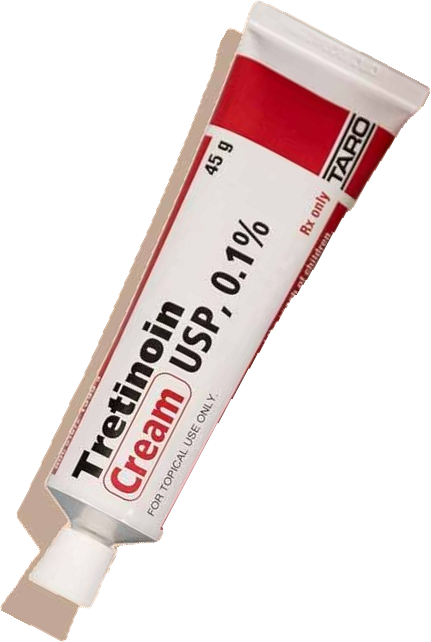
Both tretinoin and adapalene are vitamin A based creams or gels. They speed up skin renewal and unclog pores. This page explains how they differ, so you can choose with your clinician.
At a glance
| Tretinoin | Adapalene | |
|---|---|---|
| Type | Topical retinoid | Topical retinoid |
| How it works | Speeds up skin cell turnover and unclogs pores | Slows clogging of pores and calms swelling in the skin |
| Used for | Acne, sun-damaged skin, dark patches | Acne and clogged pores |
| Form | Cream or gel | Gel or cream |
| How fast it works | Weeks to months | Weeks to months |
| Common side effects | Dryness, peeling, redness, sun sensitivity | Milder dryness, redness, stinging |
| Pregnancy | Do not use in pregnancy | Talk to your clinician before use |
| Monitoring | Skin check-ins, no routine blood tests | Skin check-ins, no routine blood tests |
Strengths and schedules are set by your clinician.
How each works
Tretinoin is the original topical retinoid. It tells skin cells to renew faster. That clears clogged pores, softens fine lines and fades dark patches over time. It is one of the best studied skin products for sun-damaged skin.
Adapalene is a newer retinoid made to be gentler. It acts mainly on the way pores clog and on swelling. That makes it a common first choice for acne, and it often irritates less.
Which may suit whom
Tretinoin may suit you if you want one product for acne and for signs of sun damage. It may also help if you have dark patches that linger after acne or from melasma. You may need to build up slowly, because your skin takes time to adjust.
Adapalene may suit you if you have acne and sensitive skin, or if you have had trouble with irritation before. It is also easier to fit into a simple routine.
Your clinician looks at your skin type, your goals and your past products. Some people begin with adapalene and move to tretinoin later. Others stay on adapalene.
Using them well
Start slowly, as your clinician directs. Use a small amount on dry skin at night. Add a gentle moisturizer. Wear sunscreen every day, because retinoids make skin more sensitive to sun.
A short period of dryness, peeling or more breakouts can happen in the first weeks. Many people see this settle. Tell your clinician if you have severe irritation or swelling, and stop the product until you hear back.
Do not use tretinoin if you are pregnant or plan to become pregnant. Tell your clinician right away if you think you may be pregnant.
Can they be used together?
Most people use only one retinoid at a time. Using two at once usually adds irritation without clear benefit. Your clinician may add a different type of product, such as a benzoyl peroxide wash or an antibiotic, to a retinoid.
Do not mix retinoids on your own. Ask your Care Team first.
Cost and coverage
The cost depends on the product, the size and your pharmacy. Each consultation costs CA$175.
Many provincial drug plans do not cover topical products for cosmetic use. Some private plans may cover part of the cost for acne. Check your plan. Our insurance page explains how to claim.
Next step
Share photos and your skin history with Modern Dermatology. A Canadian-licensed medical professional will review them and suggest a retinoid plan that fits your skin.