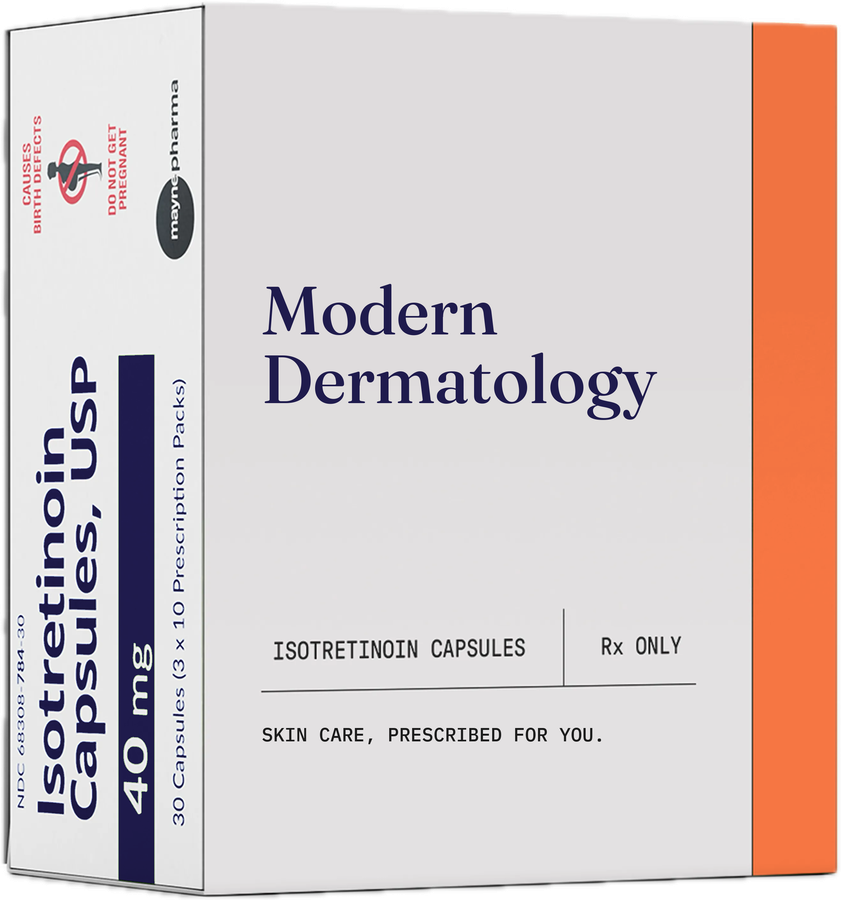
Choosing between Accutane (isotretinoin) and spironolactone is a decision for you and your clinician. This page explains the main differences in plain terms. It does not replace a medical review.
At a glance
| Accutane (isotretinoin) | Spironolactone | |
|---|---|---|
| Type | Oral retinoid | Oral anti-androgen |
| How it works | Shrinks oil glands and lowers oil | Blocks the effect of androgen hormones on the skin |
| Used for | Severe, scarring or resistant acne | Hormonal acne, often on the jawline, in women |
| Form | Capsule | Tablet |
| How fast it works | Often several months of treatment | Often 3 to 6 months to see the full effect |
| Common side effects | Dry lips, dry skin, dry eyes, joint aches | Frequent urination, breast tenderness, period changes, dizziness |
| Pregnancy | Causes serious birth defects. A pregnancy prevention program applies | Not safe in pregnancy. Reliable contraception is needed |
| Monitoring | Monthly check-ins and blood tests | Blood pressure and sometimes potassium tests |
Timelines and doses are set by your clinician.
How each works
Isotretinoin is a strong oral retinoid. It reduces the size and activity of the oil glands. It also helps calm swelling and slows the clogging of pores. Many people have long periods of clear skin after a course. Some need a second course.
Spironolactone does not act on the oil glands directly. It blocks androgen hormones from acting on skin. Androgens drive oil production in many women with acne that flares around the period or sits on the lower face. Spironolactone is also used for unwanted facial hair and female pattern hair loss.
Which may suit whom
Isotretinoin may suit you if your acne is severe, leaves scars, or has not improved with other treatments. Your clinician first checks that online care is safe for you. Some people need an in-person visit.
Spironolactone may suit you if you are a woman with hormonal acne, especially adult acne that returns after topical treatments. It is often chosen when you want a long-term option that is gentler than isotretinoin.
Neither medicine suits everyone. Your clinician reviews your photos, your history, your other medicines and your pregnancy plans. Your clinician may also suggest a topical plan instead.
Use for acne is off-label in Canada for spironolactone.
Safety and monitoring
Isotretinoin can cause serious birth defects. Do not take it if you are pregnant or plan to become pregnant. Follow the manufacturer's pregnancy prevention program. Tell your clinician right away about low mood, thoughts of self-harm or changes in vision. Your Care Team reviews you each month, and you may need blood tests of liver function and blood fats.
Spironolactone is also unsafe in pregnancy, and you must use reliable contraception. It can raise potassium and lower blood pressure. Your clinician may check both. Get urgent care for muscle weakness, a slow or irregular heartbeat, or fainting.
Can they be used together?
Some people take both, but this is a clinical choice and not common. Most people use one at a time. Your clinician may start with one and add a topical product to it.
Do not combine them on your own. Both need checks and both affect pregnancy planning.
Cost and coverage
The cost of each medicine depends on the dose, the length of treatment and your pharmacy. Each consultation costs CA$175.
Provincial drug plans and private insurance may cover part of the cost. Coverage varies by plan. Some plans ask for a special authorization form. Your Care Team can help with the form. See our insurance page for details.
Next step
Share photos and your history with Modern Dermatology. A Canadian-licensed medical professional will review them and tell you which option, if any, is right for you.